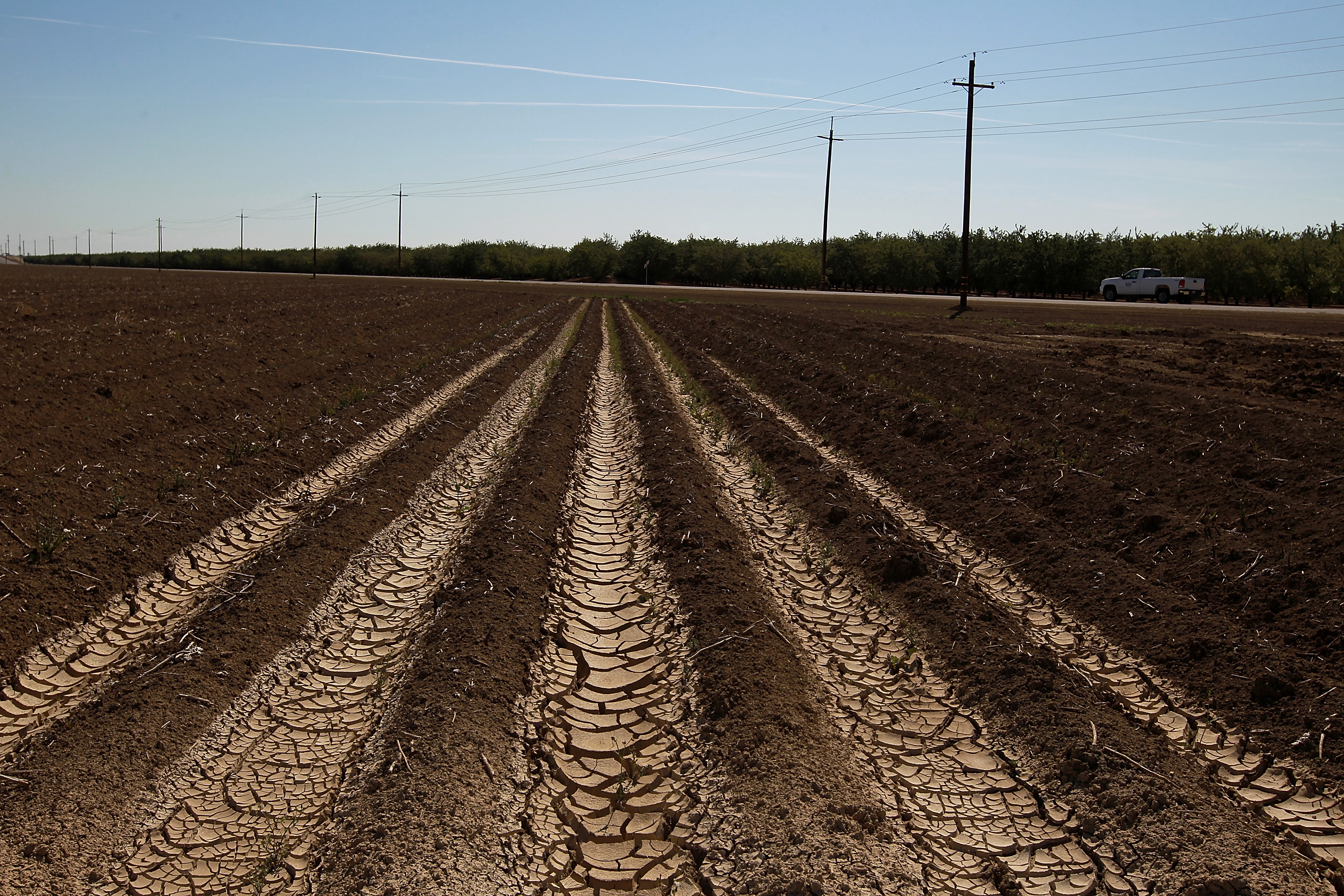
The Strait That Starves the Field
Invesco DB Agriculture Fund
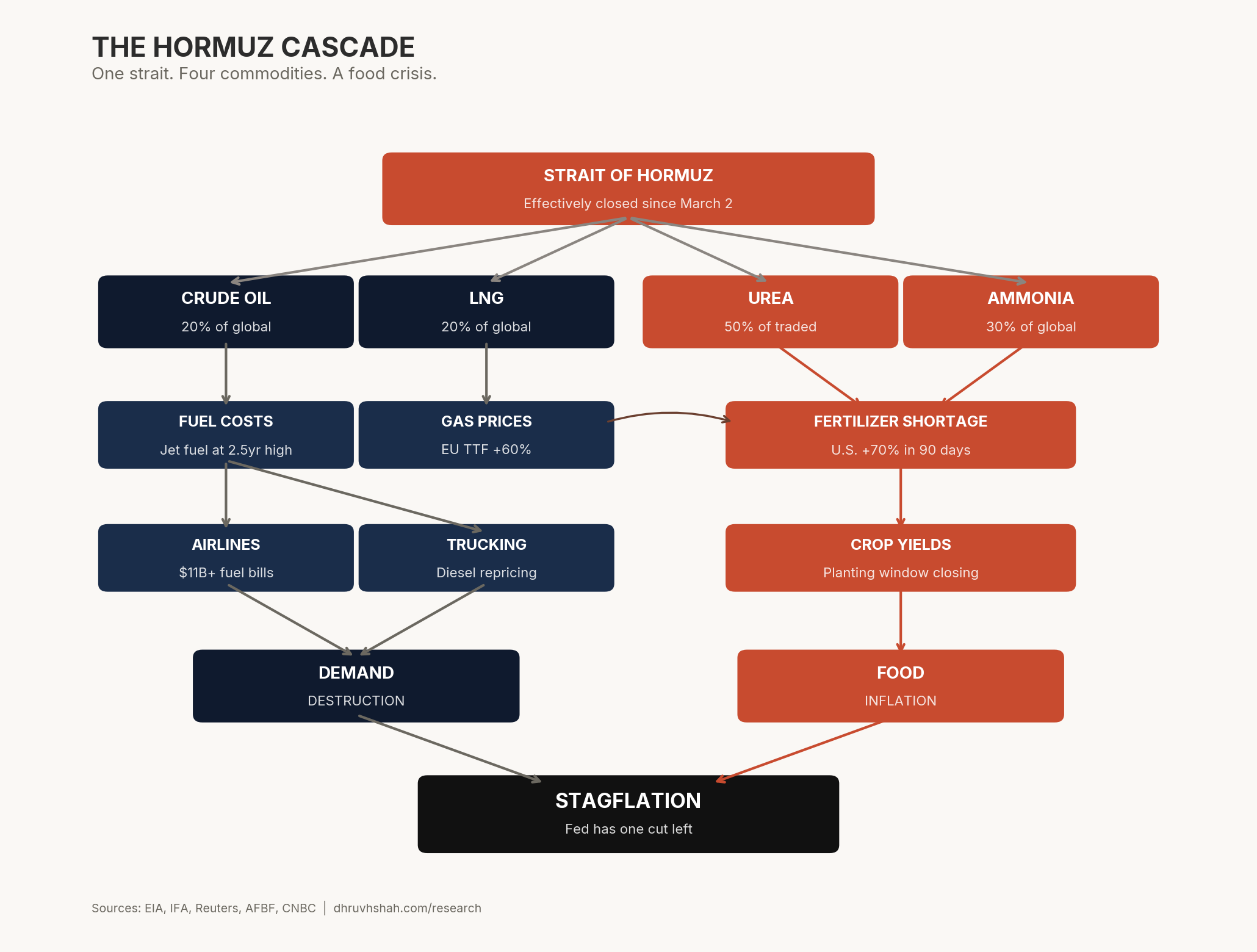
Half of all internationally traded urea passes through the Strait of Hormuz. So does 30% of global ammonia, 20% of the world's LNG, and roughly a fifth of its crude oil. When Iran effectively shut the strait down three weeks ago, the world treated it as an energy crisis. It is not. It is a food crisis that just hasn't reached the grocery store yet.
- 1Half the world's traded urea and a third of its ammonia ship through Hormuz. U.S. fertilizer prices are up 70% in 90 days, spring planting starts in weeks, and there is no strategic fertilizer reserve anywhere on earth. The IEA called this the largest supply disruption in oil market history. Measured in bushels, it is worse.
- 2On Saturday night, Trump gave Iran 48 hours to reopen Hormuz or have its power plants destroyed. Iran promised to close the strait permanently if attacked. The deadline expires Monday evening ET. The Nikkei fell 5% overnight. The Kospi triggered a circuit breaker. WTI cracked $100.
- 3Copper is cracking alongside gold, silver, and equities while oil rips higher. That divergence has a name. It is called demand destruction, and the Fed just told you it has one cut left to give.
The Part No One Is Talking About
Iraq's force majeure on all foreign operated oil fields dominated Friday's tape and deserved to. Basra Oil Company's output went from 3.3 million barrels per day to 900,000, the largest single supply disruption since 2003. Kuwait's Mina Al Ahmadi refinery caught fire for the second consecutive day after Iranian drone strikes. Brent closed Friday above $112.
But the oil story has a shadow, and the shadow is bigger. Nearly 50% of internationally traded urea ships through Hormuz. The American Farm Bureau told President Trump this week that without prioritized delivery of urea, ammonia, phosphate, and sulfur products, the U.S. risks an outright crop shortfall. Fertilizer prices are up 70% in 90 days. In India, Bangladesh, and Pakistan, fertilizer plants that depend on Gulf natural gas feedstock have already gone dark. Brazil is watching its imported urea supply vanish.
There is no SPR for fertilizer. No strategic reserve in any G7 country. The administration is trying to import fertilizer from Venezuela, a country whose production has been declining for years. The IEA called this the largest supply disruption in oil market history, but they measured it in barrels. Measured in bushels, it is worse.
The 48 Hour Clock
On Saturday night, the fertilizer crisis became permanent. Trump posted on Truth Social at 7:44 PM ET: if Iran does not fully reopen the Strait of Hormuz within 48 hours, the United States will strike its power plants, “starting with the biggest one first.” Iran's military responded within hours, promising strikes on all U.S. energy and desalination facilities in the Gulf and vowing the strait would remain closed until every destroyed plant is rebuilt.
The deadline expires Monday evening ET. Asian markets did not wait. The Nikkei dropped 5%. Brent climbed to $114. WTI cracked $100 for the first time. S&P 500 futures are down 0.6%.
Neither outcome of the ultimatum reopens the strait in the near term. If Trump follows through, Iran has promised to make Hormuz permanently worse. If he backs down, markets read it as no leverage. The only constructive outcome is a negotiated exit, and there is no evidence one exists. Windward maritime data shows only 16 tanker crossings in the past seven days. For practical purposes, the strait is shut. And every day it stays shut, the spring planting window gets smaller.
Copper Is Telling You Something
Here is the number that should worry equity investors more than the oil price: copper fell 2% last week. Gold dropped 6%. Silver lost 8%. Palladium fell 5.5%.
When industrial metals sell off in the middle of a supply shock, the market is pricing the possibility that costs kill demand before they get passed through. Copper is in everything: wiring, electronics, plumbing, construction. Its decline alongside oil's surge is the textbook stagflation signal.
The Fed made it worse on Wednesday. Rates held at 3.50 to 3.75, the dot plot compressed from two cuts to one, and Powell flagged February PPI at +0.7% as evidence the oil shock is creating inflation persistence. The 10 year yield hit 4.39%. The central bank has one 25 basis point reduction left for the entire year.
The Russell 2000 entered correction territory Friday, down 2.26%. Utilities fell 4%. Real estate dropped 3%. Energy was the only sector in the green, up 1.5%. Goldman Sachs said Friday that elevated oil prices could persist through 2027.
So What for Your Portfolio
Energy remains the only sector with positive momentum and structural tailwinds. XLE is the cleanest expression. If Hormuz stays disrupted through April, $112 Brent is the floor, not the ceiling. Saudi officials told the Wall Street Journal that crude could hit $180. At that level, jet fuel costs alone could erase a full year of airline earnings. Major carriers spent over $11 billion on fuel in 2025 with Brent in the $60s. The national average gas price hit $3.94 over the weekend.
Agricultural commodity exposure is the trade the market has not yet made. Corn futures (/ZC), soybean futures (/ZS), and DBA have barely moved relative to the magnitude of the fertilizer disruption. That repricing is coming once planting decisions get made in the next four to six weeks and USDA yield estimates start getting revised down.
On the other side: anything dependent on low rates or discretionary consumer spending is exposed. XLU and XLRE already cracked last week. If March 27 Michigan Consumer Sentiment shows inflation expectations spiking alongside declining confidence, that trade gets worse.
What to Watch
Three triggers this week. First, Monday evening. Trump's deadline expires. Either the U.S. strikes Iranian power plants, Iran retaliates across Gulf energy infrastructure, or someone blinks. All three outcomes move markets violently. If you are not positioned before the deadline, you are reacting to the headline.
Second, tanker transits. Not just oil, but fertilizer and LNG carriers. If commercial volume does not resume by month end, the spring planting window closes for many U.S. farmers. Even if tankers start moving tomorrow, it takes 30 to 45 days for a Gulf fertilizer shipment to reach the Port of New Orleans.
Third, March 27 Michigan Consumer Sentiment. If inflation expectations jump while confidence drops, the stagflation thesis hardens from narrative into measured reality.
The market spent March pricing an oil shock.
April will price the food shock that came with it.
By then, the planting window will have closed, and no amount of rate cuts can grow a crop.
For informational purposes only. Not investment advice. Sources: EIA, IFA, Reuters, AFBF, CNBC, American Farm Bureau, Wall Street Journal, Windward Maritime. Closing prices as of 4:00 PM ET, March 20. Futures as of Sunday evening, March 22, 2026.